CELLAXYS
Boost Recovery,
Built from short chains of amino acids, peptides act as messengers that guide healing, hormone regulation, and tissue repair. At CELLAXYS, each treatment is carried out according to your symptoms, delivered under physician oversight in a medically monitored setting.

What Is Peptide Therapy?
Peptide therapy is a treatment that uses lab-made amino acid chains, called peptides, to restore function and improve communication between cells.
How it works:
- Peptides are synthetic versions of natural signaling molecules your body already uses to regulate hormones, repair tissue, and manage inflammation.
- Each peptide is selected based on your symptoms and goals, then prescribed in a dose your body can recognize and respond to.
- The result is a targeted signal that tells specific tissues, like joints, the brain, or immune system, how to function more efficiently and repair themselves.
What happens next:
- Peptides bind to cell receptors, triggering biological pathways that may have slowed due to age, illness, or stress.
- This helps restore normal processes like:
· Muscle and tissue repair
· Energy production
· Sleep regulation
· Libido and cognitive clarity
Peptide Types May Target:
- Growth hormone release
- Immune function
- Inflammation reduction
- Tissue and nerve regeneration
Peptides vs Other Therapies:
Peptides: Targeted, bio-identical, and non-inflammatory. Designed to restore natural signaling and function without broad systemic effects.
Traditional Therapies: Often treat symptoms rather than the root cause, and may not restore lost signaling pathways.
Who Is Peptide Therapy For?
Peptide therapy is ideal for individuals noticing subtle but persistent changes in how their body feels and functions, before a major illness appears.







GREAT CANDIDATE IF YOU
- Are navigating perimenopause, aging, or hormone changes.
- Are under chronic stress affecting mood, sleep, or focus.
- Want faster recovery from injuries, inflammation, or overuse.
- Are seeking a non-drug approach to repair, energy, or performance.
- Feel “worn down” and want to address root causes, not just symptoms.
NOT RECOMMENDED IF
- You have an active infection or an open wound.
- You are pregnant or breastfeeding.
- You’re currently undergoing chemotherapy or high-dose immunosuppressants.
- You have serious liver or kidney disease impacting medication processing.
- You’ve had allergic reactions to peptide injections in the past.
Peptide Procedure Steps
Here’s what you can expect with Peptide Therapy:

Initial Consultation
Day 1
One-on-one with a medical provider. Discuss how you’ve been feeling, energy dips, mood shifts, sleep changes, or physical recovery. No diagnosis required, just clarity on what feels off.
Lab Testing
Day 1-2
Bloodwork is collected to detect what’s beneath the surface: hormone imbalances, inflammation, or recovery delays. No guessing, just data to drive your personalized treatment.

Treatment Planning
Day 3-5
Your provider creates a custom plan. Peptides are like biological instructions: one may reduce inflammation, another may boost growth hormone during sleep. You’ll know exactly which peptides you’ll take, when, and why.
First Dose
Day 5-7
You receive your first dose, usually a simple under-the-skin injection. Other formats (capsules or sprays) may apply depending on the peptide. Your provider teaches you how to use it safely at home and checks for immediate side effects.

Home Treatment
Week 1-4
Begin self-treatment with regular rhythm: daily or weekly doses depending on your plan. You’ll track sleep, energy, and recovery. You’re supported with a calendar and provider access for questions.

One-Month
Check-In
A virtual or in-person follow-up. Your provider evaluates changes, adjusts the dose, or adds new peptides if needed. Treatment evolves based on your body’s feedback — nothing is one-size-fits-all.

Three-Month
Review
Final review: Are you sleeping better? Stronger? More focused? If yes, you may shift to maintenance. If not, the plan is adjusted or paused. The goal is always clear: help you live and feel better.
Expected Timeline & Recovery
Expected Timeline
& Recovery
Peptide therapy works in stages. Below is what you might expect during the first few months, along with timelines based on your treatment goals:
Immediately
After (0–2 Days)
You likely won’t notice much right away. There’s no recovery time. A few people describe feeling more relaxed or sleeping a little deeper in the first few days. Most early changes are quiet and easy to overlook.
Week 1-2
This is when subtle improvements start to show. Your body may feel less reactive to stress. Recovery might speed up after activity. You may find you’re sleeping more deeply or waking up with more clarity. These are usually signs that internal physiological systems are starting to improve.
Week 3-4
Patterns become more noticeable. You may feel more balanced energy throughout the day. Soreness fades faster. Focus returns more easily. These changes aren’t dramatic, but they build on each other. That consistency is often the first sign things are moving in the right direction.
Month 2-3
By now, deeper changes often show up. That might mean body fat begins to drop, skin texture improves, or recovery times shrink noticeably. If progress feels uneven, providers often recheck dosing or switch out peptides to better match your response.
Benefits of Peptide Therapy
Benefits of
Peptide Therapy
Once you begin peptide therapy, your body steadily returns to optimal function.
Here are some of the benefits patients commonly report:

Faster
Recovery
Nagging discomfort from old injuries becomes less constant as soreness eases faster than before. Whether it’s a shoulder that used to throb at night or knees that stiffen after walking, pain tends to fade gradually as tissue begins to heal.

Balanced
Energy Levels
Due to balanced energy levels, there’s less strain pushing through your workday or workout. Energy feels more even, and you stop needing short-term fixes to stay alert. You can skip stimulants.

Improved
Skin Health
Some peptides help your body rebuild collagen. Over time, this improves elasticity and hydration. Fine lines soften. Skin holds up better under stress. People often say they look more rested, even when nothing else has changed.

Hormonal
Support
Instead of introducing external hormones, certain peptides help your brain regulate its own. This can improve mood, libido, and sleep, especially for people experiencing perimenopause or low testosterone.

Stable Weight
and Metabolism
Appetite becomes easier to manage. For patients stuck at a plateau, body composition often begins to respond again. That might mean fitting into clothes more comfortably or returning to a healthier routine.

Avoids
Medication-Heavy Routes
There’s no cortisone, no opioids, and no need for surgery. Just a method that works with your body naturally.
Risks & Side Effects
Most patients tolerate peptide therapy without problems, especially when it’s prescribed and monitored properly. But like any medical treatment, it’s important to understand what may show up and what to do if it does.
Common, short-term reactions:
- You might notice some redness or itching where the injection was given. It usually passes within a few hours.
- A small bump under the skin isn’t unusual; it’s just the body reacting to the substance.
- Some people feel a little more tired than usual the next day. That typically means your body is adjusting to the treatment.
- Sleep patterns might shift slightly at first, even if you’re not aware of it right away.
Less Common Effects:
- Persistent headaches that don’t respond to rest or hydration should be reported.
- Nausea or mild bloating can show up in the first few weeks, especially with certain peptides.
- Some patients feel lightheaded, particularly after the first few doses.
- A few experience a temporary fluttering heartbeat, which may feel strange but doesn’t always indicate a problem.
- With topical peptides, skin may become sensitive or mildly irritated where it’s applied.
Rare, But Serious Side Effects:
- Swelling around the lips, eyes, or throat should never be ignored.
- Hives that spread quickly across the body could signal a reaction.
- If breathing becomes tight or labored, call emergency services right away.
Compliance & Safety
Safety protocols:
- Your treatment is prepared with clean, single-use tools so your physician doesn’t reuse any of the materials.
- Doses come from licensed pharmacies. They’re not store-bought supplements. Before starting, your provider will go over your lab tests and explain how the peptides work in your body and what to expect after the treatment.
- Injections are administered in a clinical space with trained staff nearby. If you’re continuing at home, you’ll be shown exactly how to do it. That includes where to inject, how to store the vial, and what to look out for after.
- You’ll have follow-ups during the first few weeks. These check how your body is responding and give space to adjust. The goal is to stay on track while your system adjusts and rebuilds gradually.
Google Reviews
Discover what our patients are saying about their experience with our advanced treatments and personalized care.

Lisa Simpson
★★★★★
18 days ago
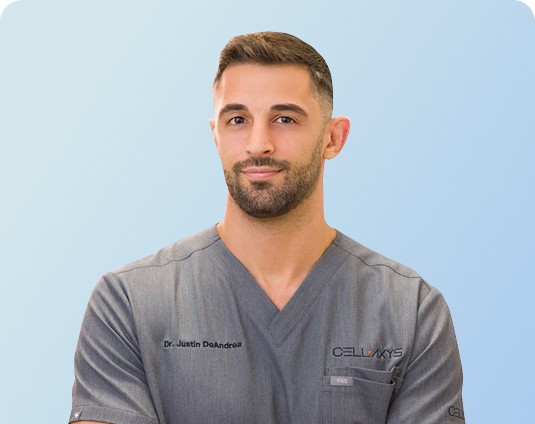
A fantastic experience. Hailey, Chas, and Nicole were wonderful and very helpful. Dr. Justin DeAndrea was very knowledgeable and explained my problem. He offered a variety of solutions. I am very satisfied with the care I received.
Inez Colmenares
★★★★★
3 weeks ago
This was a wonderful experience from the moment I walked into reception—very kind, respectful, and attentive. Everyone was incredibly friendly, and all options were explained in detail and with great understanding. I'm so excited to schedule my first treatment. Thank you all for your kindness.
Natalie Davison
★★★★★
7 months ago
Everyone in the office was very thorough and explained everything perfectly. They set up my X-rays in seconds, and there was no wait. The staff was very organized and made me feel completely comfortable. I'm happy and excited to feel better and get started. To be honest, it was one of the best medical experiences I've ever had.
What Our
Doctors Say
What Our Doctors Say
Watch Dr. [Last Name] explain NAD+ Therapy in 90 seconds.

MEET OUR
Medical Experts


TRUSTED BY EXPERTS
Featured
in the Media



FREQUENTLY ASKED
Questions
Does peptide therapy hurt?
The injections are small and go just under the skin, similar to how insulin is delivered. Most patients describe it as a quick pinch. Any soreness is mild and usually fades within minutes.
How many injections do I need for peptide therapy?
The number of injections depends on your treatment plan. Some peptides are used daily, others just a few times per week. Your provider will give you a clear schedule that matches your symptoms and goals.
What's the success rate of peptide therapy?
Results vary based on what your body needs and how depleted your signaling is to begin with. Most patients report improvement in energy, recovery, or mood within the first 4 to 8 weeks.
Is peptide therapy FDA-approved?
Some individual peptides are FDA-approved for specific uses. Others are used off-label in medical practice. All peptides given in the clinic come from licensed compounding pharmacies and meet clinical purity standards.